
Skin Quality & Resurfacing
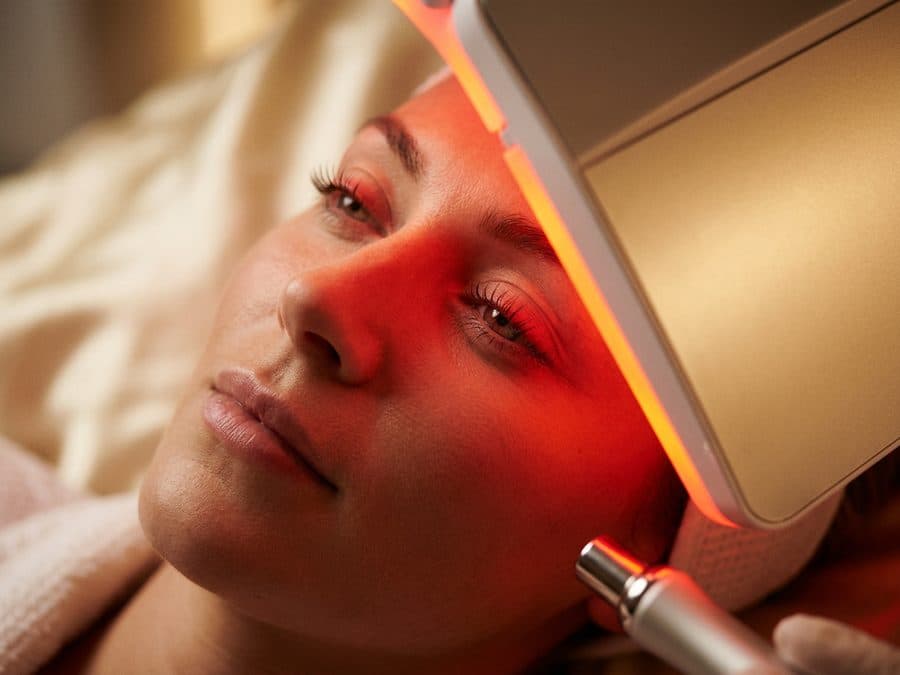
LED Phototherapy
Low-level light therapy used to support the skin's healing and calm inflammation.
What is it?
LED phototherapy uses low-level light at specific wavelengths. It does not heat or ablate the skin, and is often used alongside other treatments to support the skin's recovery.
What it is designed to address
- Skin that is inflamed or irritated
- Supporting recovery after other treatments
- Blemish-prone skin
What happens at your appointment
Your appointment begins with a face-to-face consultation with your prescriber. She will take a full medical history, discuss what you are hoping to achieve, examine the area, and explain what is and is not realistic. If treatment is clinically appropriate and you wish to go ahead, you will give written consent and the treatment is carried out in the same visit.
Results
LED is a gentle treatment typically used in a course, often in combination with others. Any change is gradual.
Aftercare
You will be given a written aftercare plan before you leave, specific to the treatment you have had. As a general principle, avoid heat, strenuous exercise, alcohol and make-up on the treated area for the period your clinician specifies, protect the area from the sun, and contact the clinic if anything concerns you.
Frequently asked questions
Yes — for every treatment, without exception. Your appointment begins with a face-to-face consultation with your prescriber, who will take your medical history, examine the area and confirm whether the treatment is appropriate for you. Treatment follows in the same visit if it is.
We will tell you, and explain why. Your clinician may suggest a different approach, or advise against treatment altogether. You will never be treated with something that is not clinically appropriate for you.
No. We do not provide aesthetic treatments to anyone under the age of 18.
Use the Book Now button on this page, or call the clinic on 020 8616 8780 and we will arrange a time that suits you.
Book led phototherapy
Your appointment always begins with a face-to-face consultation with your prescriber. Treatment only goes ahead if it is clinically appropriate for you.
More in skin quality & resurfacing
Chemical Peels
A professional solution applied to exfoliate the surface layers of the skin.
Learn moreMedical Microneedling
Fine needles used to create controlled micro-channels that stimulate the skin's natural repair response.
Learn moreHydro-Facials
A multi-step device-based facial combining exfoliation, extraction and hydration.
Learn moreYour aesthetic journey starts here
Discover personalised aesthetic treatments delivered in a professional London clinic — beginning, always, with a proper consultation.
Your appointment always begins with a face-to-face consultation with your prescriber. Treatment only goes ahead if it is clinically appropriate for you.